

Marble Floor Restoration in Delhi NCR
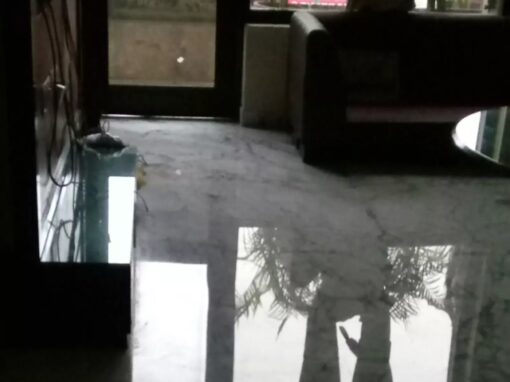
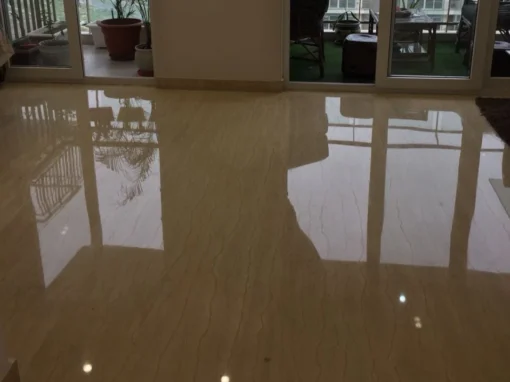
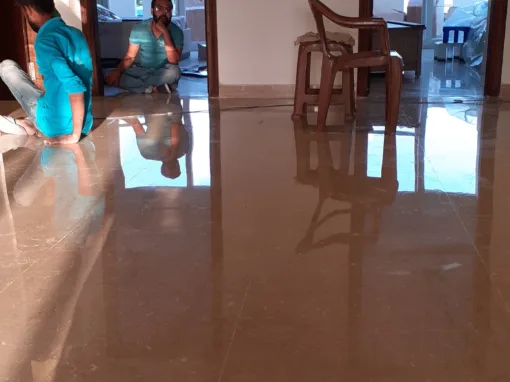
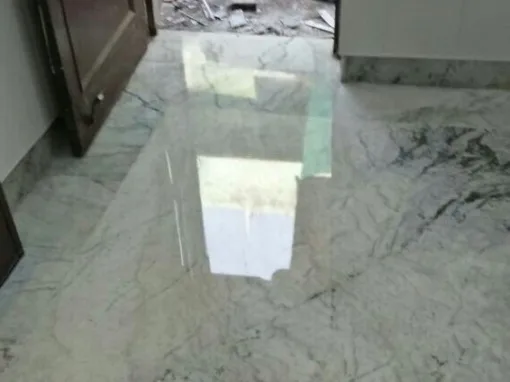
Polishing brings back gloss. Restoration fixes what dulled the floor in the first place: white etch marks under the water cooler, rust rings under planters, hairline cracks at the joints, chipped stair edges and slabs sitting at different heights. Delhi NCR mixes very old housing stock with new high-rise towers, so a single visit can mean Kota stone in one room and Italian marble in the next. We carry pads for both and quote each surface on its own merit.
- Damage mapped room by room and photographed
- Poultice treatment for oil, rust and organic stains
- Etch mark repair by fine grinding and re-polishing
- Crack, chip and joint filling with colour matching
At a glance
- Etch repair
- Poultice treatment
- Colour-matched fills
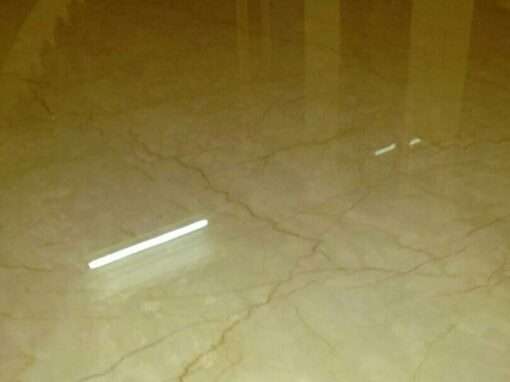
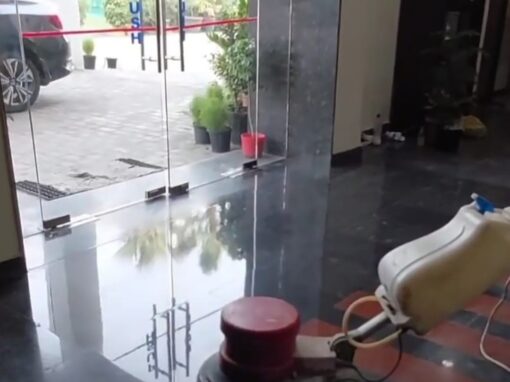
A real before and after photo is added here for the strongest result.
What is included in old marble floor restoration
- Crack, chip and joint filling with colour matching
- Grinding to level slabs where needed
- Full polishing to one uniform gloss
- Sealer or coating over treated areas
- Written verdict on what will repair and what needs replacing
- Damage mapped room by room and photographed
- Poultice treatment for oil, rust and organic stains
- Etch mark repair by fine grinding and re-polishing
What each surface needs
| Damage | Cause | How we fix it |
|---|---|---|
| White etch marks | Lemon, vinegar, cola, toilet cleaner | Fine grinding then re-polish to match |
| Oil and ghee stains | Kitchen spills, pooja areas | Poultice drawing out, then polish |
| Rust rings | Metal legs, planters, wet iron chairs | Rust poultice, light grind, sealing |
| Hairline cracks and chips | Expansion, impact, weak joints | Colour-matched epoxy fill, shaped and polished |
Every surface is tested on a hidden patch before work starts, so you see the result before committing to the whole floor.
How the job runs
- Damage mapping and photos (free)
- Poultice applied and left to draw stains out
- Crack, chip and joint repair, colour matched
- Grinding and polishing to one uniform gloss
- Protection applied and handover with before photos
Old Marble Floor Restoration rates in Delhi NCR
| Work | Guide band | Notes |
|---|---|---|
| Etch and stain removal with polish | Rs 15-25 per sq ft | Surface-level damage |
| Deep restoration with grinding | Rs 25-35 per sq ft | Heavy wear, patchiness, lippage |
| Poultice stain treatment | Quoted per patch | Oil, rust, organic stains |
| Crack and joint repair | Per running ft | Filled and colour matched |
Rates depend on surface type, damage depth, area and access. The figure is written down before work begins.
The process, step by step
- Site inspection, gloss reading and hidden test patch
- Masking of skirting, fittings, doors and furniture edges
- Residue and old polish stripping where present
- Grinding if lippage or deep damage is found
- Progressive polishing through the grit sequence
- Optional silicate, crystallisation, epoxy or nano finish
- Edge and corner hand work
- Wash-down, walkthrough and care guidance
Each stage is completed on the whole area before the next one starts, so the floor never ends up with a bright patch next to an unfinished section.
Access is confirmed before the visit: parking, lift use, gate entry, working-hour restrictions and any society paperwork. Sorting this in advance is what stops a scheduled job from becoming a wasted trip.
Old polish, wax and cleaning residue are stripped before any new finish goes on. Layering a fresh treatment over residue is what makes floors look grey again within weeks.
Water and power are the two site requirements. We need one working socket within reach of a lead and a water point; everything else, including masking material and waste bags, comes with the crew.
Why clients book us
- 12 years of stone repair across Delhi NCR
- Colour matching as standard so repairs do not show as grey lines
- Honest verdicts when a slab must be replaced
- One team for stain treatment, crack filling, grinding and polishing
Serving Delhi NCR and nearby areas
Our Badarpur (Mathura Road) and Gurgaon (Badshahpur, Sector 48) teams cover the whole NCR belt. Delhi NCR mixes very old housing stock with new high-rise towers, so a single visit can mean Kota stone in one room and Italian marble in the next. We carry pads for both and quote each surface on its own merit. Inspections are booked within 24-48 hours and most jobs take 1-2 days. Call 86070 01043 or WhatsApp photos of your floor for an indicative rate.
Old Marble Floor Restoration - common questions
Will a repaired crack be invisible?
With a colour-matched fill and re-polishing it blends into the veining and is hard to find from standing height. Under close direct light a faint line can remain, which is normal and still far better than an open crack collecting dirt.
Do treated stains come back?
Only if the cause is still there. A rust ring returns if the same wet metal leg sits on the floor again, so we recommend fixing the cause and sealing the area.
How long does restoration take?
A typical 1,000 sq ft apartment takes one to two days including poultice time, and the floor behaves like a normally polished floor afterwards.
Is restoration cheaper than replacing the floor?
Almost always. It costs a fraction of removal and re-laying, avoids matching problems with imported stone, and keeps the house usable. Replacement only makes sense for hollow, cracked-through or fully stained slabs.
Can etched marble really be repaired?
Yes if the etching is on the surface. Etch marks are shallow chemical burns of the polished layer, so light grinding and a matched polish remove them. Deep etching may leave a faint mark, which we show you on a test patch first.
How long does each step take?
As a guide, preparation is under an hour, grinding runs 25-40 minutes per 100 sq ft, polishing 15-25 minutes, and finishing plus clean-up about an hour. Bigger areas are scheduled over more days.
Can steps be skipped to save money?
Not safely. Skipping grit stages is the most common shortcut and shows up as scratch haze within weeks. If you want to reduce cost, reduce the area covered this cycle, not the process.
Do you work in one room or the whole floor at a time?
Room by room if you are living in, whole floor if the house is empty, which produces a more even finish because lighting and drying are consistent.