
Marble Restoration in Delhi NCR: Etching, Stains and Cracks Repaired
Polishing brings back gloss. Restoration fixes what dulled the floor in the first place — white etch marks under the water cooler, rust rings under planters, hairline cracks at the joints, chips at the staircase edge and uneven slabs. SR Marble Polishing Solutions has restored marble, granite and tile floors for 12 years in Gurgaon and Delhi NCR, treating each type of damage with the right method instead of buffing over it.
- Free inspection with damage mapped room by room
- Written verdict: what will repair, what will improve, what needs replacing
- Poultice treatment for oil, rust and organic stains
- Crack, chip and joint repair before polishing
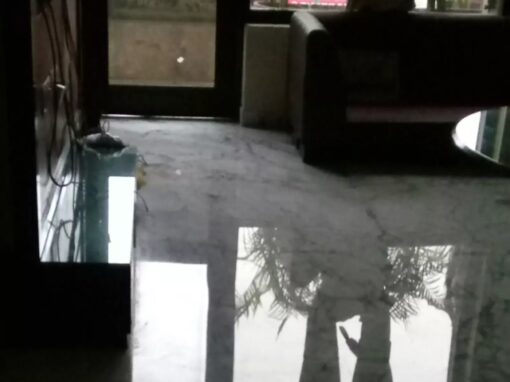
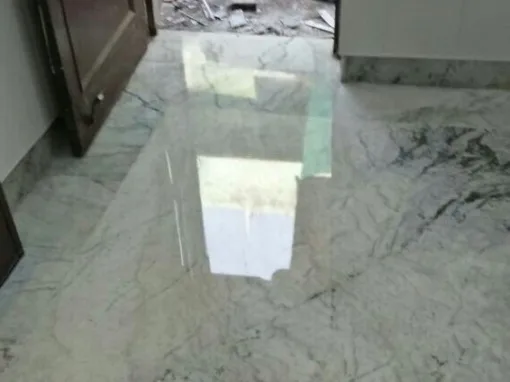
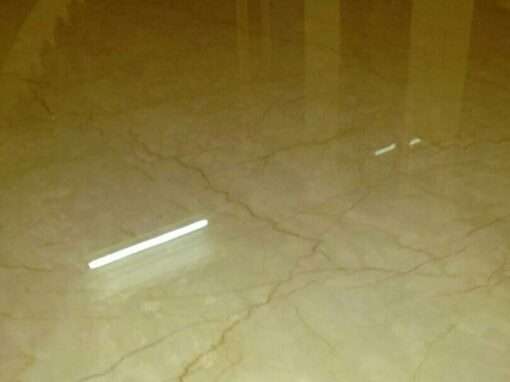
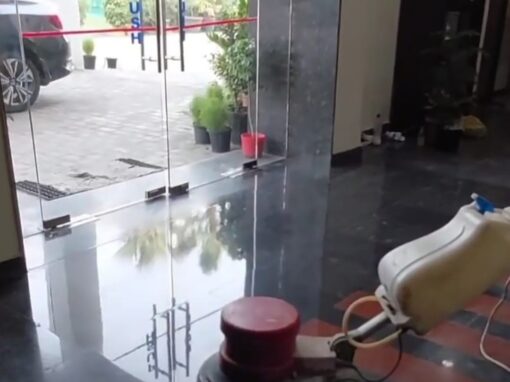
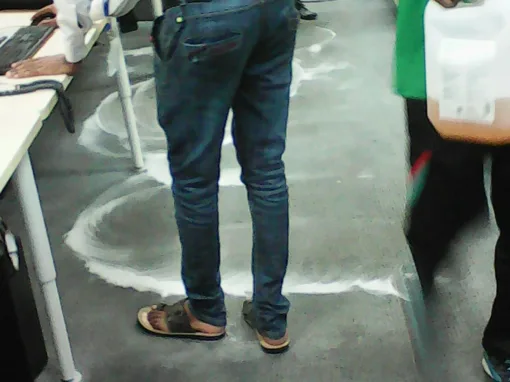
Etching around a water cooler before treatment and after grinding, poultice and re-polishing.
Damage we repair — and what each one needs
| Damage | What causes it | How we fix it |
|---|---|---|
| White etch marks | Lemon juice, vinegar, cola, toilet cleaner | Fine grinding, then re-polish to match |
| Dark oil or ghee stains | Kitchen spills, pooja areas | Poultice drawing out, then polish |
| Rust rings | Metal legs, planters, wet iron chairs | Rust poultice, light grinding, sealing |
| Hairline cracks and joint gaps | Expansion, weak original grouting | Crack filled and colour-matched before polishing |
| Chipped edges and stair nosing | Impact, heavy furniture drag | Epoxy fill, shaping, hand polishing |
| Uneven slabs and lippage | Poor original laying | Grinding to bring slabs level, then polishing |
| Hollow or broken slabs | Bonding failure | Not restorable — slab replacement, honestly advised |
Restore or replace? Our rule of thumb
- Restore when damage is surface-level: etching, stains, scratches, wear
- Restore when slabs are sound when tapped but look tired
- Restore when the stone is imported or irreplaceable in matching shade
- Restore when you want the floor usable, not broken open
- Replace when slabs sound hollow or have cracked through
- Replace when stains have soaked the full thickness of the stone
- Replace when a slab has lifted and the bedding is loose
- Replace when the joint pattern has failed across a whole room
We tell you this before quoting, and we put it in writing. Restoring a failing floor and calling it repair helps nobody.
How restoration runs
- Damage mapping (free): every mark photographed and marked, so nothing is missed.
- Stain and etch treatment: poultice applied and left to draw stains out, sometimes overnight.
- Crack, chip and joint repair: filled with matching epoxy or stone powder paste, then levelled.
- Grinding and polishing: only as deep as the damage requires, then bring the whole floor to one uniform gloss.
- Protection and handover: sealer or coating, then a walkthrough with before photos.
Restoration rates in Delhi NCR
| Work | Guide band | Notes |
|---|---|---|
| Etch and light stain removal with polish | ₹15–25 / sq ft | Surface-level damage |
| Deep restoration with grinding | ₹25–35 / sq ft | Heavy wear, patches, lippage |
| Poultice stain treatment | Quoted per patch | Oil, rust, organic stains |
| Crack, chip and joint repair | Per running ft | Filled and colour matched |
| Sealing or coating after restoration | After inspection | Silicate, epoxy or nano |
[CONFIRM: confirm these restoration bands and the per-patch poultice rate.] Restoration jobs that need overnight poultice work may run over two visits.
What clients tell us after restoration
- 12 years of stone repair across Delhi NCR, including 600+ floor projects a year.
- Colour matching as standard, because a repaired crack should not become a visible line.
- Honest verdicts: when a slab must be replaced, we say so instead of selling a polish that will not hold.
- One team for the full job: stain treatment, crack filling, grinding, polishing and sealing.
- [CONFIRM: warranty terms, insurance and GST details.]
Where we work and how soon we reach you
Gurgaon, Delhi, Noida, Faridabad and Ghaziabad, for apartments, villas, hotels, temples and offices. Inspections within 24–48 hours; most stains and cracks are treated in one visit, with polishing following the same day or the next. Call 86070 01043 or WhatsApp photos of the damaged patches.
Marble restoration — common questions
Can etched marble really be repaired?
Yes, if the etching is on the surface. Etch marks are shallow chemical burns of the polished layer, so light grinding followed by a matched polish removes them. Deep etching that has eaten into the stone may still leave a faint mark, and we show you the result on a test patch first.
Will a repaired crack be invisible?
When the crack is filled with colour-matched epoxy or stone paste and the floor is then re-polished, it blends into the veining and is very hard to spot from standing height. Under direct light at close range, a faint line can remain — that is honest, and it is still far better than an open crack catching dirt.
Do stains come back after treatment?
Only if the source is still there. A rust ring returns if the same wet metal leg sits on the floor again, so we recommend the cause is fixed and the area sealed. Oil and organic stains that have been properly drawn out do not return.
How long does restoration take and how long does it last?
A typical 1,000 sq ft apartment is restored in one to two days, including poultice time. The repaired and re-polished surface behaves like a normal polished floor afterwards, lasting 2–3 years in a home before a maintenance pass.
Is restoration cheaper than replacing the floor?
Almost always. Restoration typically costs a fraction of removing and relaying stone, avoids matching problems with imported marble, and keeps the house usable throughout. Replacement only makes sense for hollow, cracked-through or fully stained slabs.