

Marble Restoration in Delhi NCR
Some damage will not polish out because it is chemical, not wear. We identify each mark, treat it with the right method, then polish the whole floor back to one even finish. Delhi NCR mixes very old housing stock with new high-rise towers, so a single visit can mean Kota stone in one room and Italian marble in the next. We carry pads for both and quote each surface on its own merit.
- Free inspection of fill, pits and finish
- Masking of walls and fittings
- pH-neutral cleaning only
- Filler touch-up on open pits
At a glance
- Etch repair
- Poultice treatment
- Colour-matched fills
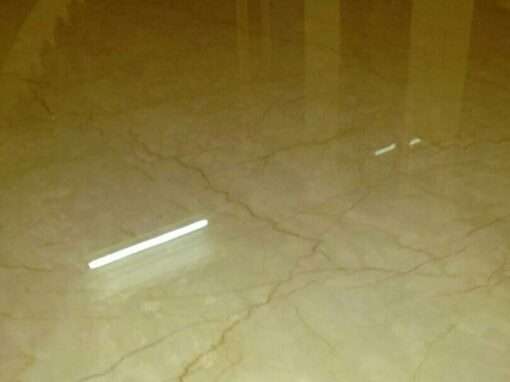
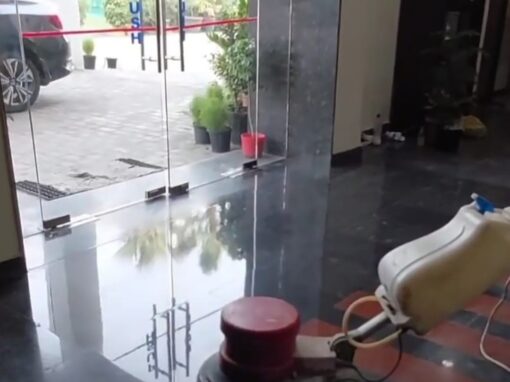
A real before and after photo is added here for the strongest result.
What is included in marble floor restoration and polishing delhi
- Masking of walls and fittings
- pH-neutral cleaning only
- Filler touch-up on open pits
- Light honing to even the surface
- Stain and efflorescence treatment
- Impregnating sealer application
- Care guidance for daily cleaning
- Free inspection of fill, pits and finish
What each surface needs
| Surface | Correct approach | Never use |
|---|---|---|
| Travertine | Neutral clean, hone, seal | Acid cleaners |
| Limestone | Neutral clean, seal | Acid and abrasive pads |
| Honed marble | Neutral clean, light polish | Acid and bleach |
| Pitted areas | Clean into the pits, refill | High-pressure washing |
Every surface is tested on a hidden patch before work starts, so you see the result before committing to the whole floor.
How the job runs
- Inspection and pH test (free)
- Masking of surrounding surfaces
- Neutral cleaning of the texture
- Filler touch-up and light honing
- Sealing and handover
Marble Floor Restoration And Polishing Delhi rates in Delhi NCR
| Work | Guide band | Notes |
|---|---|---|
| Deep cleaning | Rs 5-15 per sq ft | Neutral products |
| Cleaning and honing | Rs 15-25 per sq ft | Evening the surface |
| Filler touch-up | Per patch | Open pits and holes |
| Sealing | Quoted after inspection | Impregnating sealer |
Rates depend on surface type, damage depth, area and access. The figure is written down before work begins.
The process, step by step
- Site inspection, gloss reading and hidden test patch
- Masking of skirting, fittings, doors and furniture edges
- Residue and old polish stripping where present
- Grinding if lippage or deep damage is found
- Progressive polishing through the grit sequence
- Optional silicate, crystallisation, epoxy or nano finish
- Edge and corner hand work
- Wash-down, walkthrough and care guidance
Each stage is completed on the whole area before the next one starts, so the floor never ends up with a bright patch next to an unfinished section.
Where a floor has mixed surfaces, each one gets its own pad sequence and compound. Treating Kota stone and imported marble with the same approach is how floors get patchy.
Water and power are the two site requirements. We need one working socket within reach of a lead and a water point; everything else, including masking material and waste bags, comes with the crew.
Payment terms are stated upfront: advances apply only where material has to be bought for a large job, and the balance is settled after the walkthrough so you are never paying for work you have not seen.
Why clients book us
- Filler touch-up before honing so pits do not drag
- Impregnating sealer offered but not oversold
- Test patch on a hidden area first
- 12 years of natural stone work in Delhi NCR
Serving Delhi NCR and nearby areas
Our Badarpur (Mathura Road) and Gurgaon (Badshahpur, Sector 48) teams cover the whole NCR belt. Delhi NCR mixes very old housing stock with new high-rise towers, so a single visit can mean Kota stone in one room and Italian marble in the next. We carry pads for both and quote each surface on its own merit. Inspections are booked within 24-48 hours and most jobs take 1-2 days. Call 86070 01043 or WhatsApp photos of your floor for an indicative rate.
Marble Floor Restoration And Polishing Delhi - common questions
Will cleaning remove dirt from the pits?
Yes, with the right brushes and neutral cleaner, but the pits will refill over time. Filling open pits at the same visit is the practical fix.
Can travertine be polished to a shine?
It can be honed or lightly polished, but a mirror finish on soft, pitted stone is neither natural nor durable. We usually recommend a honed finish with sealer.
How often should it be sealed?
Every twelve to twenty-four months for floors, and more often in wet areas. Sealer slows absorption rather than blocking it.
Why is acid so damaging to travertine?
Travertine and limestone are calcium-based. Acid dissolves the surface binder, which leaves white etch marks and opens the texture, and the damage is permanent unless the surface is honed back.
How long does each step take?
As a guide, preparation is under an hour, grinding runs 25-40 minutes per 100 sq ft, polishing 15-25 minutes, and finishing plus clean-up about an hour. Bigger areas are scheduled over more days.
Can steps be skipped to save money?
Not safely. Skipping grit stages is the most common shortcut and shows up as scratch haze within weeks. If you want to reduce cost, reduce the area covered this cycle, not the process.
Do you work in one room or the whole floor at a time?
Room by room if you are living in, whole floor if the house is empty, which produces a more even finish because lighting and drying are consistent.