
Italian Marble Floor Polishing Italian Marble Polishing in Delhi NCR
Imported marble is beautiful and unforgiving. Statuario, Carrara, Botticino, Calacatta and Perlatino respond well to diamond polishing but badly to acid cleaners, harsh alkaline products and the wrong pads, because the veining shows every mistake. Delhi NCR mixes very old housing stock with new high-rise towers, so a single visit can mean Kota stone in one room and Italian marble in the next. We carry pads for both and quote each surface on its own merit.
- Photographed damage map and gloss reading
- Test patch on a hidden area before full approval
- Acid-proof masking of skirting, walls and fittings
- Sequential diamond passes at controlled speed
At a glance
- Acid-free process
- Vein-safe polishing
- Sealer or nano coat
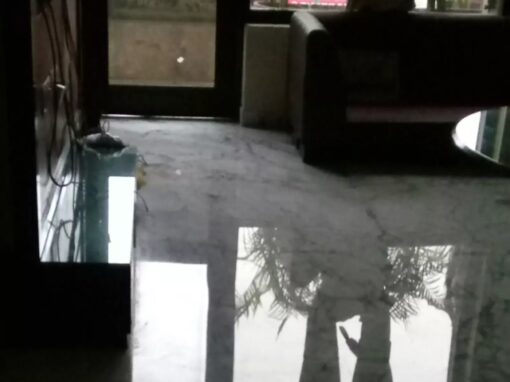
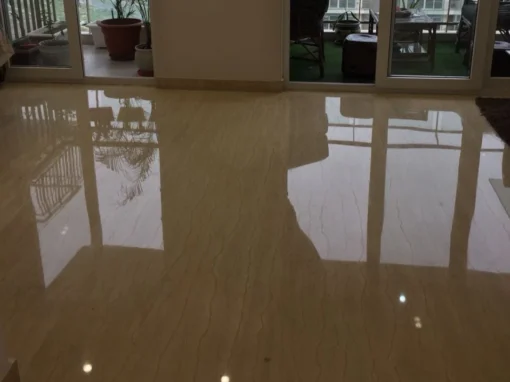
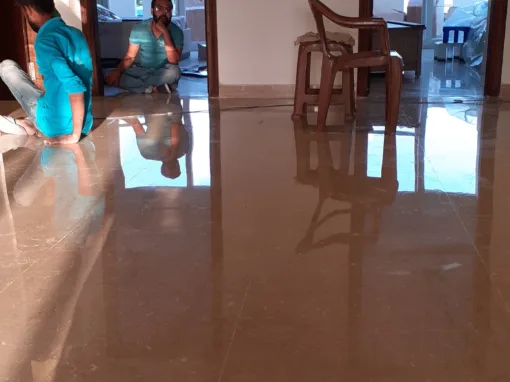
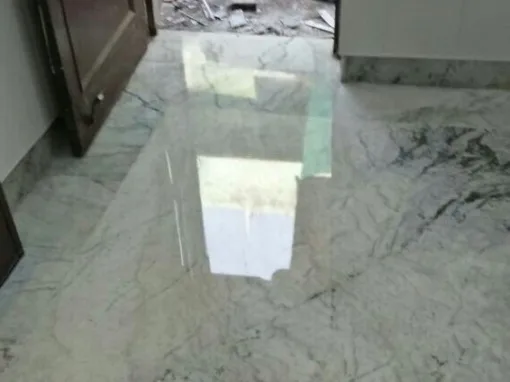
A real before and after photo is added here for the strongest result.
What is included in italian marble floor polishing delhi
- Sequential diamond passes at controlled speed
- Vein-safe polishing and hand-finished edges
- pH-neutral deep clean before finishing
- Sealer, silicate or nano coating on request
- Written after-care rules for the first month
- Photographed damage map and gloss reading
- Test patch on a hidden area before full approval
- Acid-proof masking of skirting, walls and fittings
What each surface needs
| Marble | Character | What to watch for |
|---|---|---|
| Statuario | White with bold grey veining | Etches fast, needs prompt spill control |
| Carrara | Soft white, subtle grey | Softer stone, dulls quickly in entries |
| Calacatta | Warm white with gold veins | Needs gentle pads to avoid vein bleeding |
| Perlatino and Botticino | Warm beige with fine veins | Yellowing if filled slabs are over-polished |
Every surface is tested on a hidden patch before work starts, so you see the result before committing to the whole floor.
How the job runs
- Identify the marble type and check for resin filling (free)
- Masking with acid-proof covering
- Diamond passes at controlled speed, 30-45 minutes per 100 sq ft
- Polish to the agreed gloss, then seal or coat if required
- Before and after comparison plus a list of products never to use
Italian Marble Floor Polishing Delhi rates in Delhi NCR
| Work | Guide band | Typical case |
|---|---|---|
| Maintenance polish | Rs 5-15 per sq ft | Light dulling, sound floor |
| Diamond polish to restore gloss | Rs 15-25 per sq ft | Traffic lanes, mop haze |
| Deep polish with crystallisation | Rs 25-35 per sq ft | Heavy wear, etching, patchiness |
| Sealing or nano coating | Quoted after inspection | Kitchens, entries, high traffic |
Rates depend on surface type, damage depth, area and access. The figure is written down before work begins.
Marble and granite need different treatment
| Marble | Granite | |
|---|---|---|
| Hardness | Softer, scratches more visibly | Harder, resists scratches |
| Acid | Etches immediately, never use | Dulls the surface, avoid |
| Finishing | Diamond pads up to 3000 grit | Its own pad set and compounds |
| Typical aftercare | Sealer every 12-24 months | Sealer on kitchen and stairs |
| Gloss achievable | Very high on hard whites | Deep lustre, not mirror |
We keep separate pad sets and compounds for each, because using marble products on granite (or the reverse) is the fastest way to end up with a hazy surface.
Old polish, wax and cleaning residue are stripped before any new finish goes on. Layering a fresh treatment over residue is what makes floors look grey again within weeks.
Dust and water control is planned before we start: masking on skirting and fittings, wet working instead of dry, and slurry vacuumed as the machine moves rather than left to dry in corners.
Why clients book us
- 12 years across Delhi NCR including villa, hotel and showroom projects
- Acid-free discipline: our crews never reach for the acid bottle on calcite stone
- Lower heat and pressure on resin-filled slabs to prevent yellowing
- One gloss standard across the whole floor, no patch looks newer
Serving Delhi NCR and nearby areas
Our Badarpur (Mathura Road) and Gurgaon (Badshahpur, Sector 48) teams cover the whole NCR belt. Delhi NCR mixes very old housing stock with new high-rise towers, so a single visit can mean Kota stone in one room and Italian marble in the next. We carry pads for both and quote each surface on its own merit. Inspections are booked within 24-48 hours and most jobs take 1-2 days. Call 86070 01043 or WhatsApp photos of your floor for an indicative rate.
Italian Marble Floor Polishing Delhi - common questions
Why does Italian marble dull faster than Indian marble?
It is usually the cleaning, not the stone. White imported marbles are calcium-based, so acidic cleaners and lemon juice etch the surface and leave white patches within days. A pH-neutral cleaner and clean-water mopping solves most of it.
Will polishing change the pattern?
No. Diamond polishing removes the damaged top layer; it does not bleach or alter the veining. On filled slabs we work at lower speed specifically to avoid yellowing.
Can yellowed Italian marble be corrected?
Polish residue and hard-water film lift during diamond polishing. Yellowing inside a filled slab is internal and cannot be polished out, so we test a patch and tell you the realistic outcome first.
How often does it need polishing?
Homes every 18-24 months with neutral cleaning. Lobbies, showrooms and entries every 8-12 months, longer with a sealer or nano coating.
Is a sealer worth it?
Yes in working areas. It slows absorption of oil, tea and coloured liquids, which buys time to wipe a spill, and needs refreshing every 12-24 months.
Can you polish a floor that mixes marble and granite?
Yes, and it is common in lobbies and staircases. Each surface is polished to a matching level of sheen rather than the same pad sequence, so the two read as one floor.
Is granite easier to maintain than marble?
It is less acid-sensitive and harder, so it stains and scratches less. It still dulls from repeated wrong cleaning, and it still needs sealing in wet or greasy areas.
Why does marble etch while granite does not?
Marble is calcium-based, so acid dissolves the surface and leaves a white mark. Granite is silicate-based and resists acid better, though strong acid still dulls its polish.