
Silicate Marble Polishing in Kolhapur
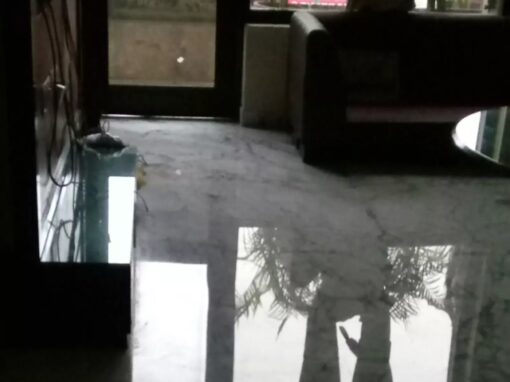
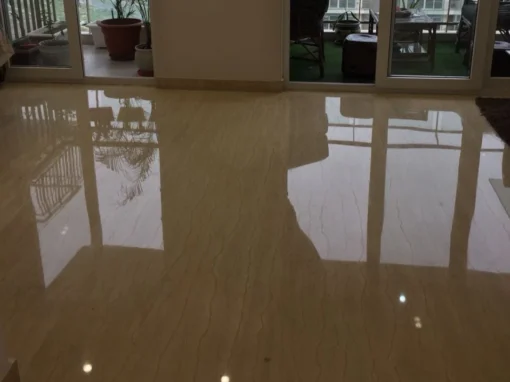
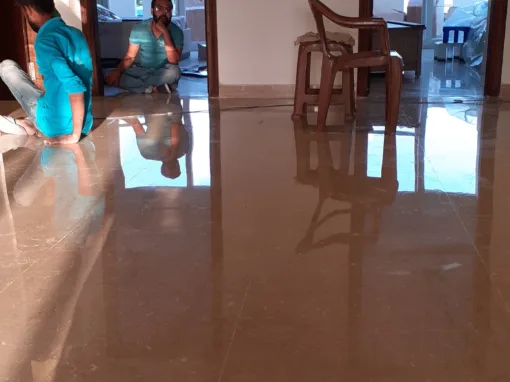
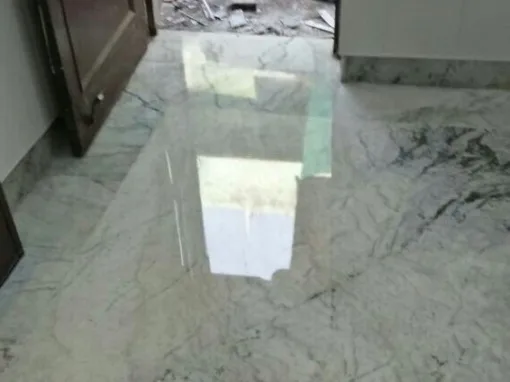
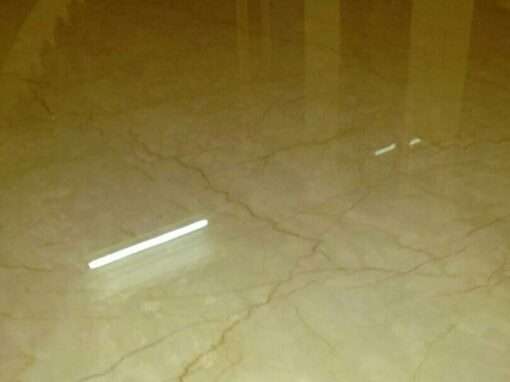
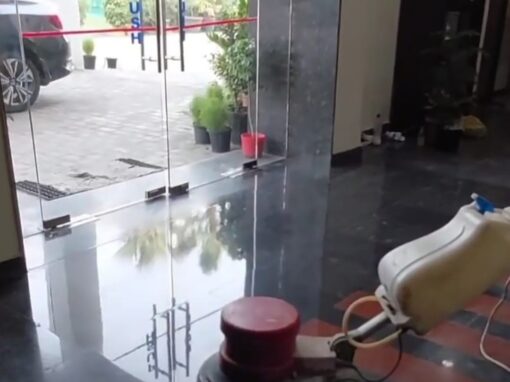
Silicate treatment is what gives marble a wet, deep gloss instead of a thin surface shine. The chemical reacts with the calcium in the stone and hardens the top layer, so the finish holds through mopping and footfall far longer than plain polishing. Work in Kolhapur is planned as a scheduled visit: the crew and machines travel together on a fixed date, and the rate is written down after the floor is seen in person or from clear photos.
- Gloss and polish-condition check first
- Masking of skirting, walls and fittings
- Diamond polishing to the grit the treatment needs
- Even section-by-section silicate application
At a glance
- Sil200 / Sil800
- Wet-look gloss
- Applied after polishing
A real before and after photo is added here for the strongest result.
What is included in silicate marble polishing
- Diamond polishing to the grit the treatment needs
- Even section-by-section silicate application
- Machine buffing to remove residue and streaks
- Edge and corner treatment by hand
- Walkway protection until the surface sets
- Cleaning advice so acid cleaners never touch it
- Gloss and polish-condition check first
- Masking of skirting, walls and fittings
What each surface needs
| Treatment | Character | Best for |
|---|---|---|
| Sil200 | Fast build, strong initial gloss | Homes and moderate traffic |
| Sil800 | Deeper wet look, holds gloss longer | Lobbies, showrooms, hotels |
| Over new stone | Protects an unworn surface | Recently laid or newly polished floors |
| Over worn stone | Short-lived unless polished first | Only after a full diamond sequence |
Every surface is tested on a hidden patch before work starts, so you see the result before committing to the whole floor.
How the job runs
- Assessment to confirm silicate suits the stone and the room
- Diamond polishing to 800-1500 grit so there is a finish worth locking in
- Silicate applied in sections and buffed while it reacts
- Second pass on heavy areas for even gloss
- Gloss check and a list of cleaners to avoid
Silicate Marble Polishing rates in Kolhapur
| Work | Guide band | Notes |
|---|---|---|
| Polish plus Sil200 | Rs 15-25 per sq ft | Homes, standard traffic |
| Polish plus Sil800 | Rs 25-35 per sq ft | Lobbies, hotels, heavy traffic |
| Silicate over an already polished floor | Quoted after inspection | Floor must still be sound |
| Repeat maintenance treatment | Quoted after inspection | Every 1-3 years |
Rates depend on surface type, damage depth, area and access. The figure is written down before work begins.
Reading a per sq ft quote correctly
- Ask whether grinding is included or quoted separately, because that is the single biggest swing in the number
- Ask what the rate excludes: coatings, crack filling, slab replacement and waste removal are the usual extras
- Check whether the area is charged on carpet area or built-up area, and whether staircases are priced per step
- Confirm the rate applies to the measured floor, not an estimate from photographs
- Insist on one written figure per surface where floors are mixed
| Rate band | Typical work included |
|---|---|
| Lowest band | Maintenance buff on a sound floor |
| Middle band | Diamond polishing, scratch and lane correction |
| Upper band | Grinding, deep correction, crystallisation or coating |
Two quotes can differ by 40 percent for the same floor simply because one includes grinding and the other does not. Compare the scope, not just the number.
After-care guidance is handed over in writing: which cleaner to use, how to mop, and what to avoid during the first week. Most repeat problems trace back to cleaning products rather than the work itself.
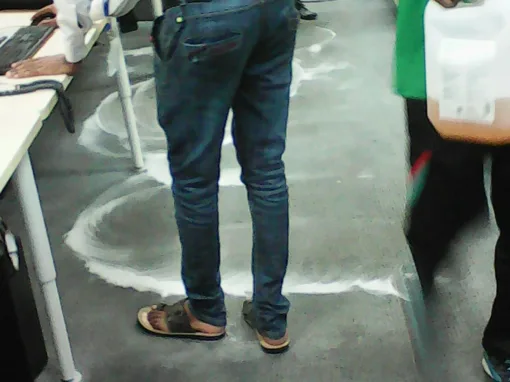
Protection is planned, not improvised. Furniture is moved to one side and covered, curtain hems are lifted, and a walking route is kept clear throughout so the household can still move around.
Access is confirmed before the visit: parking, lift use, gate entry, working-hour restrictions and any society paperwork. Sorting this in advance is what stops a scheduled job from becoming a wasted trip.
Why clients book us
- Sil200 and Sil800 applied by trained crews
- Product chosen for the stone, not one bottle for all
- Residue buffed off before handover
- 12 years of stone finishing
Serving Kolhapur and nearby areas
Kolhapur jobs are booked as a fixed visit batch, so travel is planned into the date instead of being added as a surprise. Work in Kolhapur is planned as a scheduled visit: the crew and machines travel together on a fixed date, and the rate is written down after the floor is seen in person or from clear photos. Inspections are booked within 24-48 hours and most jobs take 1-2 days. Call 86070 01043 or WhatsApp photos of your floor for an indicative rate.
Silicate Marble Polishing - common questions
Is silicate the same as waxing the floor?
No. Wax sits on the surface and wipes off. Silicate reacts with the calcium in the marble and hardens the surface layer, so the gloss is part of the stone and survives mopping.
How long does it last?
Roughly two to three years in homes and one to two years in heavy-footfall lobbies. Using a pH-neutral cleaner instead of acid is the biggest factor.
Can it be applied to a floor that was never polished?
It can, but it is rarely worth it, because silicate amplifies whatever surface it meets and locks in scratches. We polish to 800-1500 grit first or refuse the treatment.
Will it make the floor slippery?
A high-gloss finish is smoother when wet. In bathrooms, kitchens and on staircases we recommend a satin or crystallised finish instead of mirror gloss.
How long before we can walk on it?
The floor is walkable the same evening. Only normal drying after the polishing stage is needed, with no curing days.
Why do per sq ft rates differ so much between contractors?
Almost always scope. A rate that excludes grinding, crack filling and coatings looks cheaper until those are added. Ask for the scope in writing and compare the total, not the headline rate.
Is the rate cheaper for larger areas?
Yes. Above roughly 1,000 sq ft we move to slab rates because setup and travel are spread over more work.
How do you measure the area?
On site, with you present, room by room. You see the measurement sheet before the quote is finalised.