

Silicate Marble Polishing in Kohima
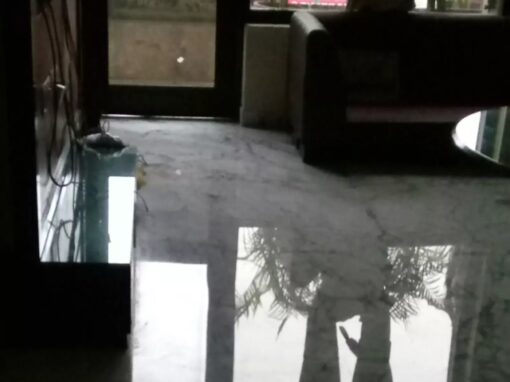
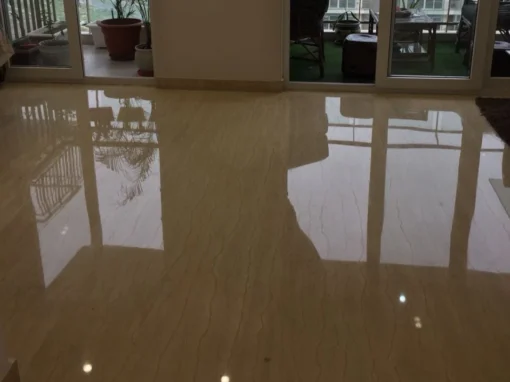
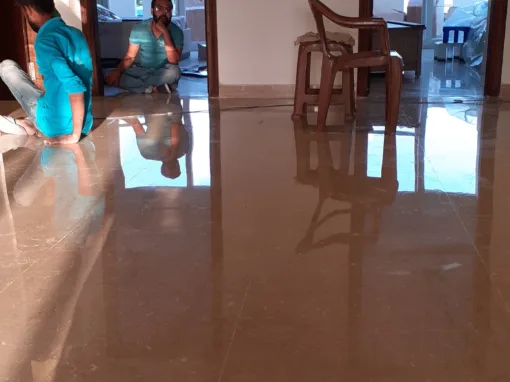
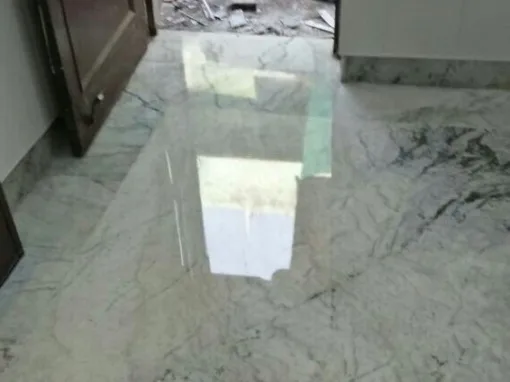
Silicate treatment is what gives marble a wet, deep gloss instead of a thin surface shine. The chemical reacts with the calcium in the stone and hardens the top layer, so the finish holds through mopping and footfall far longer than plain polishing. Work in Kohima is planned as a scheduled visit: the crew and machines travel together on a fixed date, and the rate is written down after the floor is seen in person or from clear photos.
- Free inspection of fill, pits and finish
- Masking of walls and fittings
- pH-neutral cleaning only
- Filler touch-up on open pits
At a glance
- Sil200 / Sil800
- Wet-look gloss
- Applied after polishing
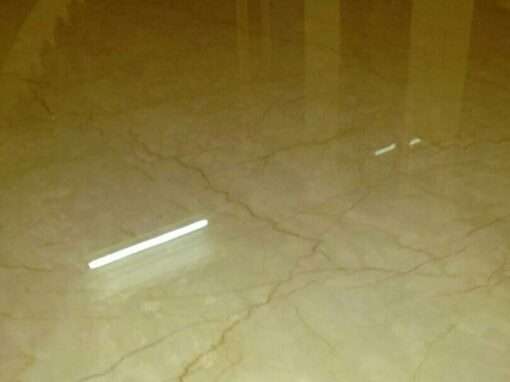
A real before and after photo is added here for the strongest result.
What is included in silicate marble polishing
- Free inspection of fill, pits and finish
- Masking of walls and fittings
- pH-neutral cleaning only
- Filler touch-up on open pits
- Light honing to even the surface
- Stain and efflorescence treatment
- Impregnating sealer application
- Care guidance for daily cleaning
What each surface needs
| Surface | Correct approach | Never use |
|---|---|---|
| Travertine | Neutral clean, hone, seal | Acid cleaners |
| Limestone | Neutral clean, seal | Acid and abrasive pads |
| Honed marble | Neutral clean, light polish | Acid and bleach |
| Pitted areas | Clean into the pits, refill | High-pressure washing |
Every surface is tested on a hidden patch before work starts, so you see the result before committing to the whole floor.
How the job runs
- Inspection and pH test (free)
- Masking of surrounding surfaces
- Neutral cleaning of the texture
- Filler touch-up and light honing
- Sealing and handover
Silicate Marble Polishing rates in Kohima
| Work | Guide band | Notes |
|---|---|---|
| Deep cleaning | Rs 5-15 per sq ft | Neutral products |
| Cleaning and honing | Rs 15-25 per sq ft | Evening the surface |
| Filler touch-up | Per patch | Open pits and holes |
| Sealing | Quoted after inspection | Impregnating sealer |
Rates depend on surface type, damage depth, area and access. The figure is written down before work begins.
Keeping the finish after the job is done
| Habit | Why it matters |
|---|---|
| Dry dust mopping | Removes grit before it scratches the surface |
| pH-neutral cleaner only | Acid etches marble and bleach dulls the finish |
| Damp mop, never flooding | Standing water leaves marks and weakens joints |
| Mats at entries | Captures grit where it enters |
| Felt pads under furniture | Stops drag marks on polished surfaces |
- A light maintenance polish every 12-18 months keeps gloss without a full job
- Commercial floors are usually re-polished annually, homes every two years
- Sealer or nano coating, where applied, is refreshed on the schedule we hand over
Every job ends with a walkthrough. You see the gloss reading, the treated patches and the joints before the crew packs up, and the same crew owns any correction needed later.
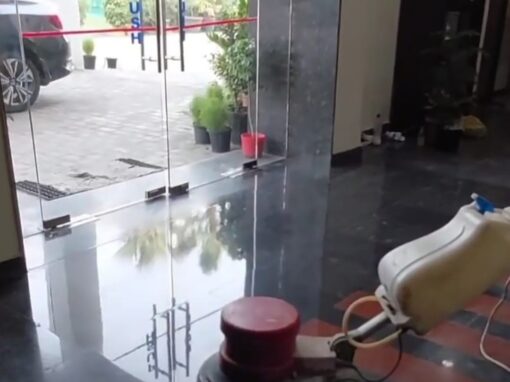
Machines are matched to the job. A 400 mm single-disc machine for open floors, edge machines for skirtings and staircases, and hand blocks for corners and thresholds where a machine cannot safely reach.
Team composition is consistent: a supervisor plus two machine operators on standard jobs, with additional hands for staircases, multiple floors or tight access. The same supervisor stays with the job start to finish.
Why clients book us
- Impregnating sealer offered but not oversold
- Test patch on a hidden area first
- 12 years of natural stone work
- Acid-free on all calcite stone, without exception
Serving Kohima and nearby areas
Kohima jobs are booked as a fixed visit batch, so travel is planned into the date instead of being added as a surprise. Work in Kohima is planned as a scheduled visit: the crew and machines travel together on a fixed date, and the rate is written down after the floor is seen in person or from clear photos. Inspections are booked within 24-48 hours and most jobs take 1-2 days. Call 86070 01043 or WhatsApp photos of your floor for an indicative rate.
Silicate Marble Polishing - common questions
Why is acid so damaging to travertine?
Travertine and limestone are calcium-based. Acid dissolves the surface binder, which leaves white etch marks and opens the texture, and the damage is permanent unless the surface is honed back.
Will cleaning remove dirt from the pits?
Yes, with the right brushes and neutral cleaner, but the pits will refill over time. Filling open pits at the same visit is the practical fix.
Can travertine be polished to a shine?
It can be honed or lightly polished, but a mirror finish on soft, pitted stone is neither natural nor durable. We usually recommend a honed finish with sealer.
How often should it be sealed?
Every twelve to twenty-four months for floors, and more often in wet areas. Sealer slows absorption rather than blocking it.
How often does the floor need a maintenance polish?
Every 12-18 months for homes and every 8-12 months for commercial floors. It is a much smaller job than the original restoration.
Which cleaner should we use?
A pH-neutral stone cleaner with clean water, dried after mopping. Avoid acid, bleach and abrasive powders, which are the main causes of dull and etched floors.
Can maintenance work be done room by room?
Yes. We schedule it in sections so the house stays usable, and it takes a fraction of the time of a full polish.