
Silicate Marble Polishing in Jharkhand
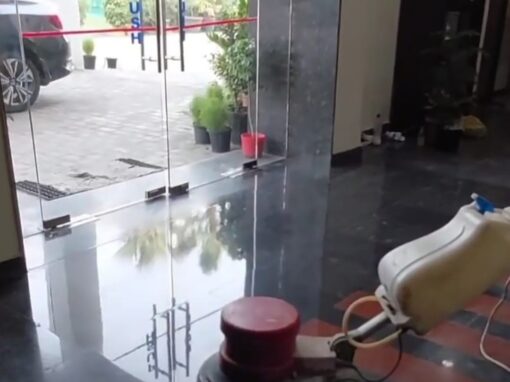
If your polished floor looks bright but shallow, silicate is usually the missing step. It is applied after diamond polishing and bonds with the stone surface, deepening the gloss and slowing down how fast it dulls. Work in Jharkhand is planned as a scheduled visit: the crew and machines travel together on a fixed date, and the rate is written down after the floor is seen in person or from clear photos.
- Gloss reading and damage mapping before we quote
- Masking of walls, skirting and furniture edges
- Coarse diamond passes for scratches and lippage
- Progressive grits to remove every previous scratch pattern
At a glance
- Sil200 / Sil800
- Wet-look gloss
- Applied after polishing
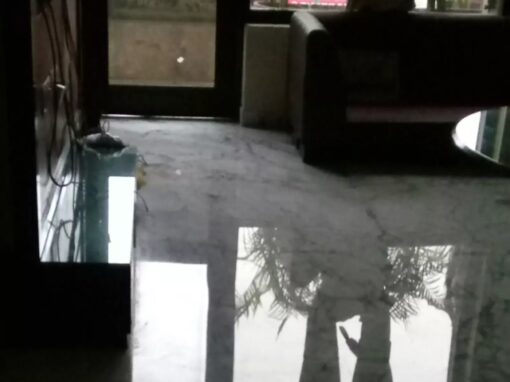
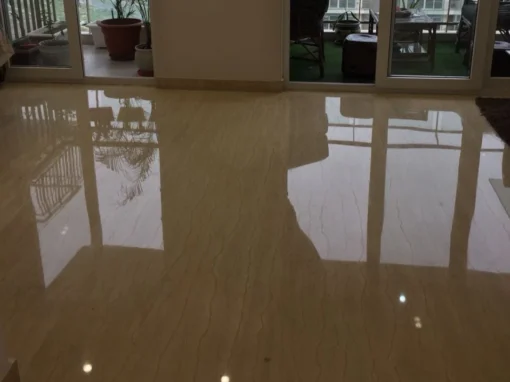
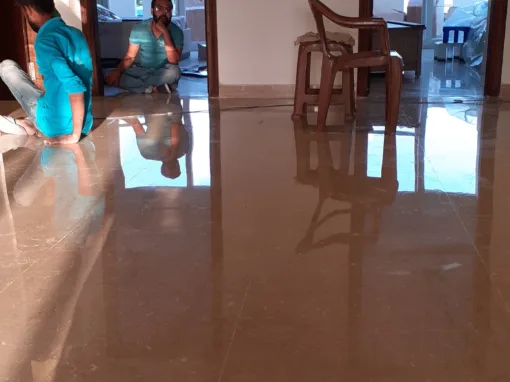
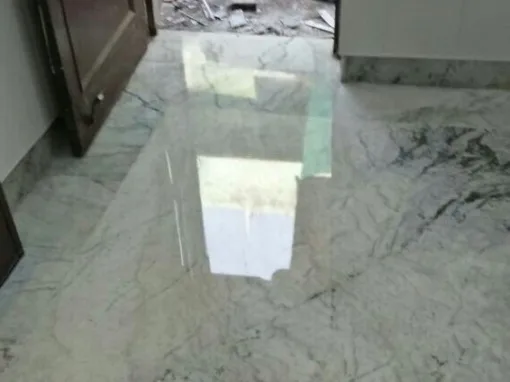
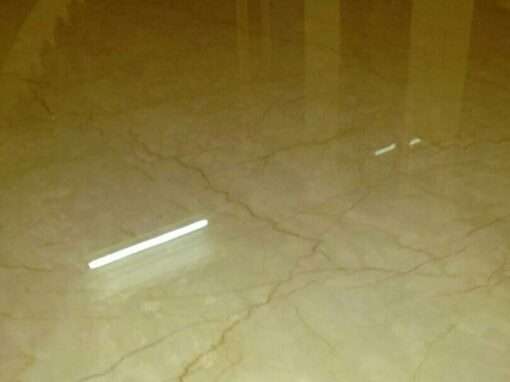
A real before and after photo is added here for the strongest result.
What is included in silicate marble polishing
- Masking of walls, skirting and furniture edges
- Coarse diamond passes for scratches and lippage
- Progressive grits to remove every previous scratch pattern
- Fine polishing to bring up the working gloss
- Edge and corner work by hand machine
- Optional crystallisation or nano finish
- Floor washed and handed over with a gloss check
- Gloss reading and damage mapping before we quote
What each surface needs
| Grit | What it does | When it is needed |
|---|---|---|
| 60 and 100 | Cuts back lippage, deep scratches and rough patches | Uneven joints, heavy damage |
| 200 and 400 | Removes grinding marks, levels the surface | After any coarse stage |
| 800 | Closes the pores and prepares the stone | Almost every job |
| 1500 and 3000 | Working gloss and final mirror pass | Homes, lobbies, showrooms |
Every surface is tested on a hidden patch before work starts, so you see the result before committing to the whole floor.
How the job runs
- Inspection and test patch (free, 20 minutes)
- Masking of all surfaces that should not get slurry
- Sequential diamond passes, 30-45 minutes per 100 sq ft
- Finishing pass at 1500 or 3000 grit, coating if you approve
- Handover with before and after gloss comparison
Silicate Marble Polishing rates in Jharkhand
| Work | Guide band | Where it applies |
|---|---|---|
| Light diamond pass | Rs 5-15 per sq ft | Sound floors, mild dulling |
| Standard diamond polishing | Rs 15-25 per sq ft | Scratch lanes, worn gloss |
| Deep diamond plus crystallisation | Rs 25-35 per sq ft | Lippage, stains, heavy wear |
| Coating after polishing | Quoted after inspection | Silicate, epoxy or nano |
Rates depend on surface type, damage depth, area and access. The figure is written down before work begins.
What improves, and what cannot be fixed
| Condition | Realistic outcome |
|---|---|
| Dull, even wear | Full gloss returns, looks new |
| Scratch lanes in walkways | Removed, surface level again |
| Light etching and hard water | Removed with polishing |
| Deep etching or acid burns | Faint mark may remain |
| Cracked or hollow slabs | Needs replacement, not polishing |
| Stains soaked through the slab | Lightened, not erased |
We show you this on a test patch before quoting the full job, so the result you see at handover is the result you were promised.
Team composition is consistent: a supervisor plus two machine operators on standard jobs, with additional hands for staircases, multiple floors or tight access. The same supervisor stays with the job start to finish.
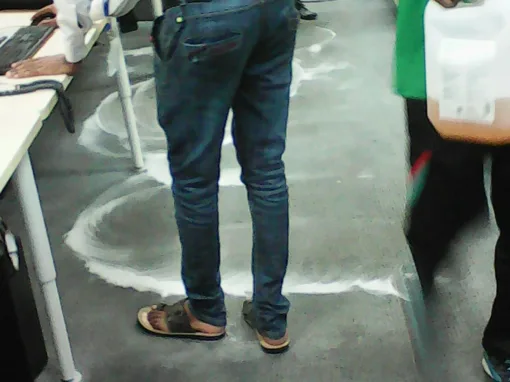
Dust and water control is planned before we start: masking on skirting and fittings, wet working instead of dry, and slurry vacuumed as the machine moves rather than left to dry in corners.
Timing is agreed before the crew arrives: arrival window, the room sequence and the handover time are confirmed in writing, so nobody is waiting around or guessing when the floor will be free.
Why clients book us
- One contractor for grinding, polishing and coatings
- Gloss checked with you before the crew leaves
- 12 years, 600+ floor projects a year
- Fresh diamond segments, because worn pads leave swirl marks
Serving Jharkhand and nearby areas
Jharkhand jobs are booked as a fixed visit batch, so travel is planned into the date instead of being added as a surprise. Work in Jharkhand is planned as a scheduled visit: the crew and machines travel together on a fixed date, and the rate is written down after the floor is seen in person or from clear photos. Inspections are booked within 24-48 hours and most jobs take 1-2 days. Call 86070 01043 or WhatsApp photos of your floor for an indicative rate.
Silicate Marble Polishing - common questions
How is diamond polishing different from the polish my housekeeping does?
Housekeeping applies cream or wax that sits on the surface and wears off in walking lanes within weeks. Diamond polishing refines the stone itself, so the finish is part of the floor.
How much marble does it remove?
Microns, not visible layers. Even a full sequence on a damaged floor only corrects the worn top surface; coarse grinding is the stage that removes more and we only use it when needed.
How glossy will the floor look?
Most marble reaches a near-mirror gloss. Statuario and Makrana take a very high gloss, while honed travertine and some Kota floors look better satin. We agree the target before starting.
How long does the finish last?
Two to three years in homes before a light maintenance pass; eight to twelve months in offices and hotels, longer with a silicate or nano coating.
Can it be done in an occupied home?
Yes. The process is wet, so dust stays low. We work room by room and leave dry paths so you can stay in the house.
Can the floor look exactly new again?
On sound stone with surface wear, yes. Where damage has gone deeper, such as acid burns or stains soaked through the slab, the result is a major improvement rather than perfection, and we tell you which one to expect before starting.
Why do some floors come back brighter than others?
Stone type and previous care. White and hard marbles take a higher gloss; softer or previously acid-washed floors top out lower. Consistent cleaning products are what keep the difference from widening.
Do you guarantee the same result on every surface?
No, and no honest contractor should. A mixed floor gets one uniform gloss level chosen after testing each surface, which sometimes means a satin finish rather than mirror.