

Silicate Marble Polishing in Goa
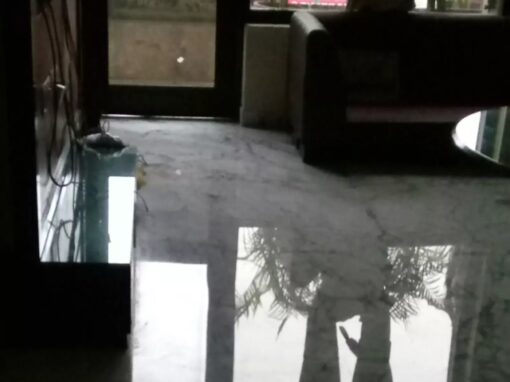
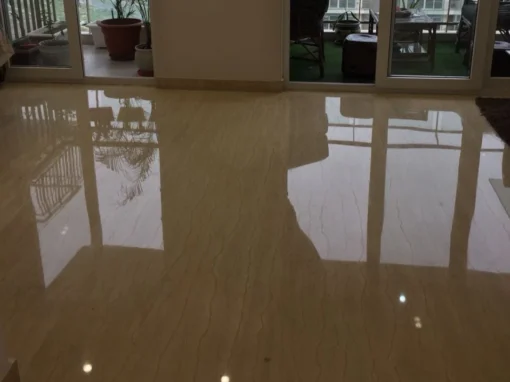
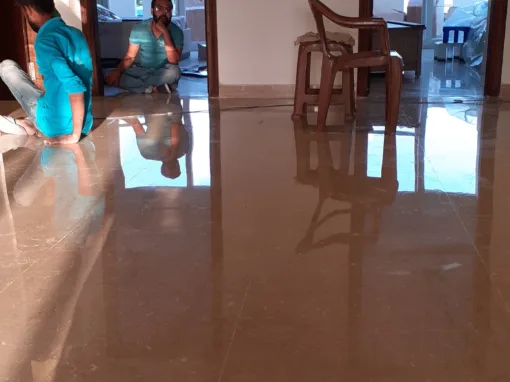
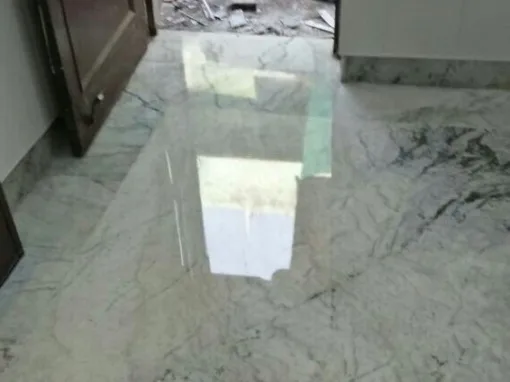
Silicate treatment is what gives marble a wet, deep gloss instead of a thin surface shine. The chemical reacts with the calcium in the stone and hardens the top layer, so the finish holds through mopping and footfall far longer than plain polishing. Work in Goa is planned as a scheduled visit: the crew and machines travel together on a fixed date, and the rate is written down after the floor is seen in person or from clear photos.
- Free inspection of porosity and stain history
- Deep cleaning before sealing (sealer over dirt seals dirt)
- Drying time allowed, no sealing on damp stone
- Impregnating sealer applied evenly
At a glance
- Sil200 / Sil800
- Wet-look gloss
- Applied after polishing
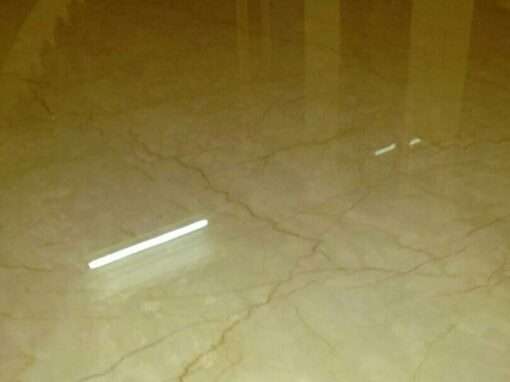
A real before and after photo is added here for the strongest result.
What is included in silicate marble polishing
- Impregnating sealer applied evenly
- Second coat on high-absorption stone
- Buffer and residue removal
- Wet-area and kitchen priority treatment
- Maintenance and re-seal schedule explained
- Free inspection of porosity and stain history
- Deep cleaning before sealing (sealer over dirt seals dirt)
- Drying time allowed, no sealing on damp stone
What each surface needs
| Stone | Absorption | Seal priority |
|---|---|---|
| Marble | Medium, acid and oil sensitive | Kitchens, entries, washbasins |
| Limestone | High | All wet areas |
| Granite | Low | Kitchen platforms, stairs |
| Travertine | High, pitted | Bathrooms, outdoors |
Every surface is tested on a hidden patch before work starts, so you see the result before committing to the whole floor.
How the job runs
- Inspection and porosity test (free)
- Deep cleaning and residue removal
- Full drying of the stone surface
- Sealer applied in even coats
- Buffing, handover and re-seal schedule
Silicate Marble Polishing rates in Goa
| Work | Guide band | Notes |
|---|---|---|
| Clean and seal | Rs 5-15 per sq ft | Dry floors and walls |
| Strip, clean and seal | Rs 15-25 per sq ft | Old coating present |
| High-absorption stone, two coats | Quoted after inspection | Limestone and travertine |
| Re-seal cycle | Per sq ft | Every 12-24 months |
Rates depend on surface type, damage depth, area and access. The figure is written down before work begins.
What improves, and what cannot be fixed
| Condition | Realistic outcome |
|---|---|
| Dull, even wear | Full gloss returns, looks new |
| Scratch lanes in walkways | Removed, surface level again |
| Light etching and hard water | Removed with polishing |
| Deep etching or acid burns | Faint mark may remain |
| Cracked or hollow slabs | Needs replacement, not polishing |
| Stains soaked through the slab | Lightened, not erased |
We show you this on a test patch before quoting the full job, so the result you see at handover is the result you were promised.
Every job ends with a walkthrough. You see the gloss reading, the treated patches and the joints before the crew packs up, and the same crew owns any correction needed later.
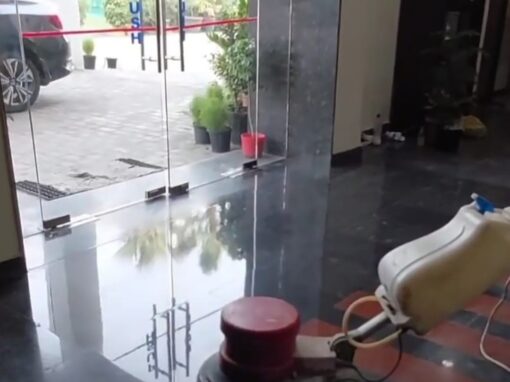
Machines are matched to the job. A 400 mm single-disc machine for open floors, edge machines for skirtings and staircases, and hand blocks for corners and thresholds where a machine cannot safely reach.
Team composition is consistent: a supervisor plus two machine operators on standard jobs, with additional hands for staircases, multiple floors or tight access. The same supervisor stays with the job start to finish.
Why clients book us
- 12 years of stone care
- Sealer applied only on clean, dry stone
- Impregnating sealers used, not film coatings
- Honest about what sealing does and does not do
Serving Goa and nearby areas
Goa jobs are booked as a fixed visit batch, so travel is planned into the date instead of being added as a surprise. Work in Goa is planned as a scheduled visit: the crew and machines travel together on a fixed date, and the rate is written down after the floor is seen in person or from clear photos. Inspections are booked within 24-48 hours and most jobs take 1-2 days. Call 86070 01043 or WhatsApp photos of your floor for an indicative rate.
Silicate Marble Polishing - common questions
Will sealing make my marble stain-proof?
No, and any contractor saying that is overselling. Sealing buys you time to wipe a spill. Lemon juice or oil left overnight can still mark sealed stone.
How often should stone be re-sealed?
Every twelve to twenty-four months for working areas like kitchens, entries and washbasins. Dry bedroom floors and walls hold sealer much longer.
Can sealer be applied over an old polish?
No. It will not bond, and it traps the old residue underneath. Cleaning or stripping first is part of the job, not an optional extra.
Does sealing change the colour?
Impregnating sealers are colourless. If a sealer darkens the stone, it is a film-forming product rather than an impregnator, which is a different finish choice.
Can the floor look exactly new again?
On sound stone with surface wear, yes. Where damage has gone deeper, such as acid burns or stains soaked through the slab, the result is a major improvement rather than perfection, and we tell you which one to expect before starting.
Why do some floors come back brighter than others?
Stone type and previous care. White and hard marbles take a higher gloss; softer or previously acid-washed floors top out lower. Consistent cleaning products are what keep the difference from widening.
Do you guarantee the same result on every surface?
No, and no honest contractor should. A mixed floor gets one uniform gloss level chosen after testing each surface, which sometimes means a satin finish rather than mirror.