
Diamond Marble Polishing in Sadar Bazaar
Cream polish and wax hide dullness for a few weeks. Diamond polishing removes the dull layer itself, working from coarse grit to a mirror pass, so the finish survives normal mopping and footfall. Work in Sadar Bazaar is planned as a scheduled visit: the crew and machines travel together on a fixed date, and the rate is written down after the floor is seen in person or from clear photos.
- Damage mapped room by room and photographed
- Poultice treatment for oil, rust and organic stains
- Etch mark repair by fine grinding and re-polishing
- Crack, chip and joint filling with colour matching
At a glance
- 60-3000 grit
- No wax finish
- Klindex machines
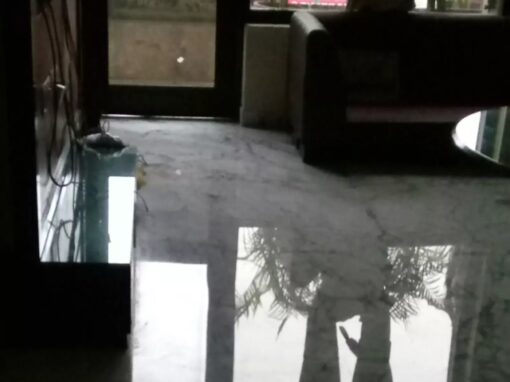
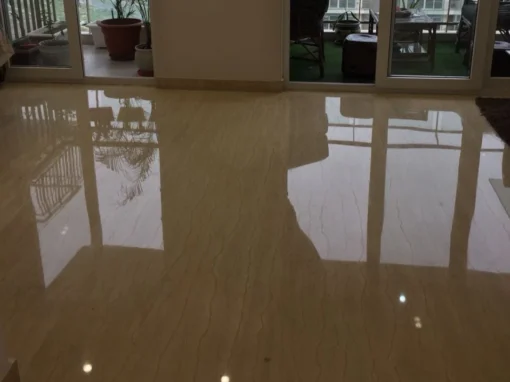
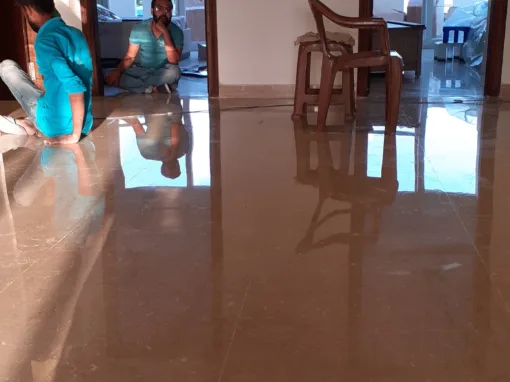
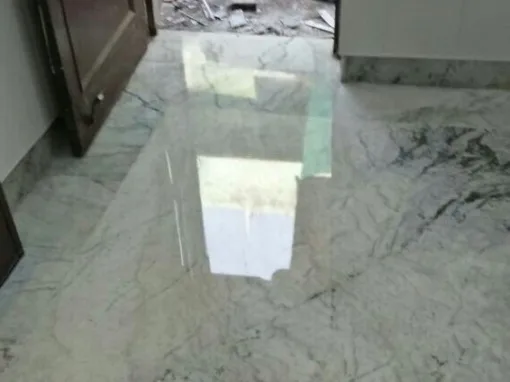
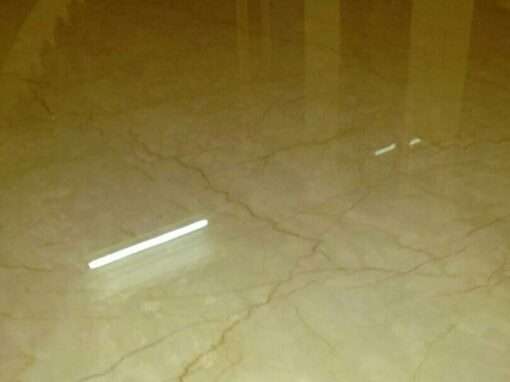
A real before and after photo is added here for the strongest result.
What is included in diamond marble polishing
- Damage mapped room by room and photographed
- Poultice treatment for oil, rust and organic stains
- Etch mark repair by fine grinding and re-polishing
- Crack, chip and joint filling with colour matching
- Grinding to level slabs where needed
- Full polishing to one uniform gloss
- Sealer or coating over treated areas
- Written verdict on what will repair and what needs replacing
What each surface needs
| Damage | Cause | How we fix it |
|---|---|---|
| White etch marks | Lemon, vinegar, cola, toilet cleaner | Fine grinding then re-polish to match |
| Oil and ghee stains | Kitchen spills, pooja areas | Poultice drawing out, then polish |
| Rust rings | Metal legs, planters, wet iron chairs | Rust poultice, light grind, sealing |
| Hairline cracks and chips | Expansion, impact, weak joints | Colour-matched epoxy fill, shaped and polished |
Every surface is tested on a hidden patch before work starts, so you see the result before committing to the whole floor.
How the job runs
- Damage mapping and photos (free)
- Poultice applied and left to draw stains out
- Crack, chip and joint repair, colour matched
- Grinding and polishing to one uniform gloss
- Protection applied and handover with before photos
Diamond Marble Polishing rates in Sadar Bazaar
| Work | Guide band | Notes |
|---|---|---|
| Etch and stain removal with polish | Rs 15-25 per sq ft | Surface-level damage |
| Deep restoration with grinding | Rs 25-35 per sq ft | Heavy wear, patchiness, lippage |
| Poultice stain treatment | Quoted per patch | Oil, rust, organic stains |
| Crack and joint repair | Per running ft | Filled and colour matched |
Rates depend on surface type, damage depth, area and access. The figure is written down before work begins.
What improves, and what cannot be fixed
| Condition | Realistic outcome |
|---|---|
| Dull, even wear | Full gloss returns, looks new |
| Scratch lanes in walkways | Removed, surface level again |
| Light etching and hard water | Removed with polishing |
| Deep etching or acid burns | Faint mark may remain |
| Cracked or hollow slabs | Needs replacement, not polishing |
| Stains soaked through the slab | Lightened, not erased |
We show you this on a test patch before quoting the full job, so the result you see at handover is the result you were promised.
Quality is checked twice: once mid-job, when the first section is finished and you can see the achievable gloss, and once at handover when the whole surface should read evenly under daylight and under your own lighting.
Access is confirmed before the visit: parking, lift use, gate entry, working-hour restrictions and any society paperwork. Sorting this in advance is what stops a scheduled job from becoming a wasted trip.
Where a floor has mixed surfaces, each one gets its own pad sequence and compound. Treating Kota stone and imported marble with the same approach is how floors get patchy.
Why clients book us
- 12 years of stone repair
- Colour matching as standard so repairs do not show as grey lines
- Honest verdicts when a slab must be replaced
- One team for stain treatment, crack filling, grinding and polishing
Serving Sadar Bazaar and nearby areas
Sadar Bazaar jobs are booked as a fixed visit batch, so travel is planned into the date instead of being added as a surprise. Work in Sadar Bazaar is planned as a scheduled visit: the crew and machines travel together on a fixed date, and the rate is written down after the floor is seen in person or from clear photos. Inspections are booked within 24-48 hours and most jobs take 1-2 days. Call 86070 01043 or WhatsApp photos of your floor for an indicative rate.
Diamond Marble Polishing - common questions
Can etched marble really be repaired?
Yes if the etching is on the surface. Etch marks are shallow chemical burns of the polished layer, so light grinding and a matched polish remove them. Deep etching may leave a faint mark, which we show you on a test patch first.
Will a repaired crack be invisible?
With a colour-matched fill and re-polishing it blends into the veining and is hard to find from standing height. Under close direct light a faint line can remain, which is normal and still far better than an open crack collecting dirt.
Do treated stains come back?
Only if the cause is still there. A rust ring returns if the same wet metal leg sits on the floor again, so we recommend fixing the cause and sealing the area.
How long does restoration take?
A typical 1,000 sq ft apartment takes one to two days including poultice time, and the floor behaves like a normally polished floor afterwards.
Is restoration cheaper than replacing the floor?
Almost always. It costs a fraction of removal and re-laying, avoids matching problems with imported stone, and keeps the house usable. Replacement only makes sense for hollow, cracked-through or fully stained slabs.
Can the floor look exactly new again?
On sound stone with surface wear, yes. Where damage has gone deeper, such as acid burns or stains soaked through the slab, the result is a major improvement rather than perfection, and we tell you which one to expect before starting.
Why do some floors come back brighter than others?
Stone type and previous care. White and hard marbles take a higher gloss; softer or previously acid-washed floors top out lower. Consistent cleaning products are what keep the difference from widening.
Do you guarantee the same result on every surface?
No, and no honest contractor should. A mixed floor gets one uniform gloss level chosen after testing each surface, which sometimes means a satin finish rather than mirror.