
Diamond Marble Polishing in Jangpura
Diamond polishing cuts the stone with graded diamond pads, so the shine comes out of the marble instead of sitting on top of it. That is the difference between a floor that still looks good after a year and one that goes patchy in three months, the way wax does. Work in Jangpura is planned as a scheduled visit: the crew and machines travel together on a fixed date, and the rate is written down after the floor is seen in person or from clear photos.
- Free inspection of fill, pits and finish
- Masking of walls and fittings
- pH-neutral cleaning only
- Filler touch-up on open pits
At a glance
- 60-3000 grit
- No wax finish
- Klindex machines
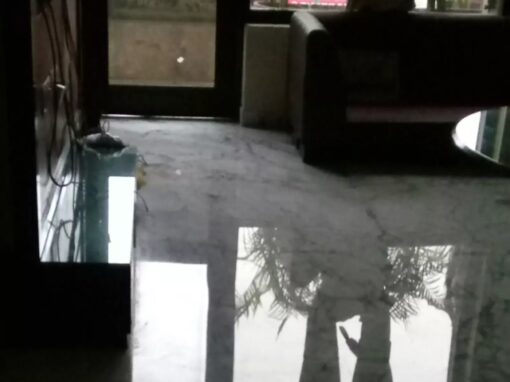
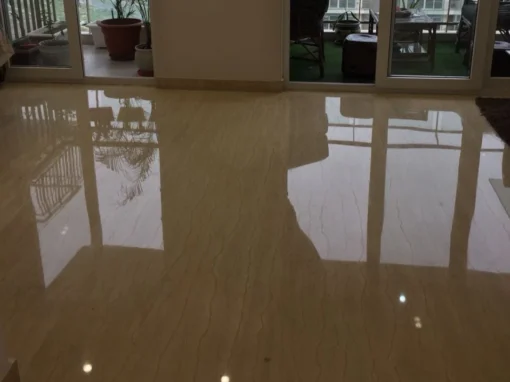
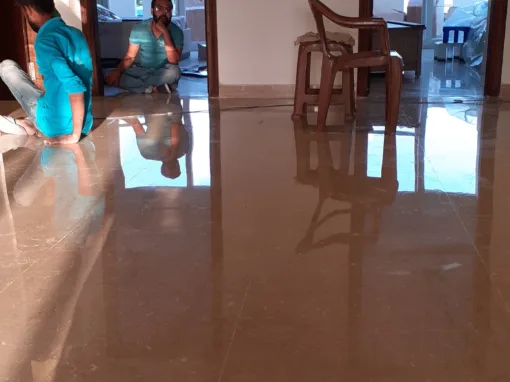
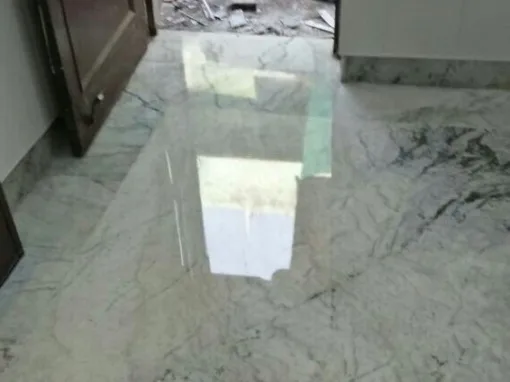
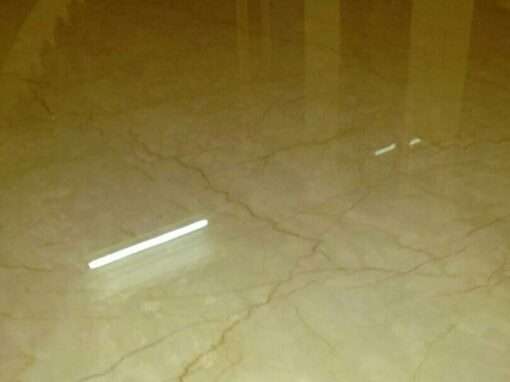
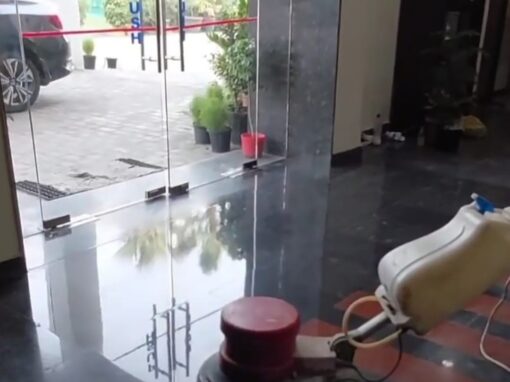
A real before and after photo is added here for the strongest result.
What is included in diamond marble polishing
- Masking of walls and fittings
- pH-neutral cleaning only
- Filler touch-up on open pits
- Light honing to even the surface
- Stain and efflorescence treatment
- Impregnating sealer application
- Care guidance for daily cleaning
- Free inspection of fill, pits and finish
What each surface needs
| Surface | Correct approach | Never use |
|---|---|---|
| Travertine | Neutral clean, hone, seal | Acid cleaners |
| Limestone | Neutral clean, seal | Acid and abrasive pads |
| Honed marble | Neutral clean, light polish | Acid and bleach |
| Pitted areas | Clean into the pits, refill | High-pressure washing |
Every surface is tested on a hidden patch before work starts, so you see the result before committing to the whole floor.
How the job runs
- Inspection and pH test (free)
- Masking of surrounding surfaces
- Neutral cleaning of the texture
- Filler touch-up and light honing
- Sealing and handover
Diamond Marble Polishing rates in Jangpura
| Work | Guide band | Notes |
|---|---|---|
| Deep cleaning | Rs 5-15 per sq ft | Neutral products |
| Cleaning and honing | Rs 15-25 per sq ft | Evening the surface |
| Filler touch-up | Per patch | Open pits and holes |
| Sealing | Quoted after inspection | Impregnating sealer |
Rates depend on surface type, damage depth, area and access. The figure is written down before work begins.
Looking after the finish
| Timeframe | What to do |
|---|---|
| First 24 hours | Stay off coated areas, keep furniture off the floor |
| First week | Dry mop only, no wet mopping, no chemical cleaners |
| Ongoing | pH-neutral cleaner, damp mop, dry after |
| Every 12-18 months | Light maintenance polish to hold the gloss |
- Never use acid, bleach, vinegar or abrasive powder on stone
- Wipe spills promptly, particularly lemon, tea and oil
- Use felt pads on furniture and mats at entry points
- Keep planters and metal legs off wet floors to prevent rust rings
Quality is checked twice: once mid-job, when the first section is finished and you can see the achievable gloss, and once at handover when the whole surface should read evenly under daylight and under your own lighting.
Access is confirmed before the visit: parking, lift use, gate entry, working-hour restrictions and any society paperwork. Sorting this in advance is what stops a scheduled job from becoming a wasted trip.
Where a floor has mixed surfaces, each one gets its own pad sequence and compound. Treating Kota stone and imported marble with the same approach is how floors get patchy.
Why clients book us
- Impregnating sealer offered but not oversold
- Test patch on a hidden area first
- 12 years of natural stone work
- Acid-free on all calcite stone, without exception
Serving Jangpura and nearby areas
Jangpura jobs are booked as a fixed visit batch, so travel is planned into the date instead of being added as a surprise. Work in Jangpura is planned as a scheduled visit: the crew and machines travel together on a fixed date, and the rate is written down after the floor is seen in person or from clear photos. Inspections are booked within 24-48 hours and most jobs take 1-2 days. Call 86070 01043 or WhatsApp photos of your floor for an indicative rate.
Diamond Marble Polishing - common questions
Why is acid so damaging to travertine?
Travertine and limestone are calcium-based. Acid dissolves the surface binder, which leaves white etch marks and opens the texture, and the damage is permanent unless the surface is honed back.
Will cleaning remove dirt from the pits?
Yes, with the right brushes and neutral cleaner, but the pits will refill over time. Filling open pits at the same visit is the practical fix.
Can travertine be polished to a shine?
It can be honed or lightly polished, but a mirror finish on soft, pitted stone is neither natural nor durable. We usually recommend a honed finish with sealer.
How often should it be sealed?
Every twelve to twenty-four months for floors, and more often in wet areas. Sealer slows absorption rather than blocking it.
What should I avoid in the first week?
Wet mopping, chemical floor cleaners, dragging furniture and placing potted plants back on the floor. Dry mopping and clean water only until the finish settles.
Which cleaner do you recommend?
Any pH-neutral stone cleaner, used with clean water and followed by drying. That single habit prevents most of the dullness and staining we are called back to fix.
What voids the finish durability?
Acid and abrasive cleaning. A floor polished this month can look dull in eight weeks if it is mopped with an acidic general-purpose cleaner.